🔥 The Big Update: The wait is over, and the OpenAI Sora API is finally out in the wild for developer and enterprise access. For the past year, we watched the cherry-picked demo videos and assumed Hollywood was entirely finished. But now that the actual API pricing structure is sitting in front of us, agency owners are realizing a very harsh truth: replacing your video production team with text-to-video API calls might actually bankrupt your margins if you don’t know exactly what you are doing.
Let’s cut right through the marketing noise. I’ve spent the last three weeks running a localized test with a beta access key, routing mock client briefs through the Sora API to see if it holds up in a real-world agency pipeline. Everyone is obsessing over how realistic the water reflections look, but the people signing the checks only care about one metric: cost per usable second. Today, we are going to tear down the Sora API billing model, expose the hidden “re-roll” tax that nobody talks about, and determine if an AI video pipeline is actually a profitable venture for your agency in 2026.
💡 TrendseAI Insight: Do not budget based on Sora’s advertised “per-minute” generation cost. Due to unpredictable physics hallucinations, agencies are currently averaging a 5:1 generation ratio. You must budget for five API requests just to get one usable clip, drastically altering your expected ROI.

The Sticker Price vs. The Real Cost (Explain Like I’m 5)
To understand why the Sora API pricing is causing such a massive headache, you have to look at how video diffusion models actually consume compute. Unlike text-based LLMs (like ChatGPT or Claude) where you pay fractions of a cent per thousand tokens, generating video requires spinning up massive clusters of high-end GPUs for extended periods. OpenAI isn’t just sending you a file; they are simulating physics, lighting, and temporal consistency frame-by-frame.
When you look at the raw API documentation, the pricing seems somewhat palatable at first glance. It’s tiered based on resolution (720p vs 1080p) and framerate. However, the true cost of using the Sora API in a commercial setting is something I call the “Re-Roll Tax.”
Imagine you are generating a 10-second clip of a woman drinking coffee in a Parisian cafe for a client’s Instagram ad. You send the prompt and pay the compute fee. The video comes back, and the lighting is perfect. The background is flawless. But as she brings the cup to her lips, her hand morphs into six liquid fingers that fuse with the ceramic mug. You can’t use that for a paying client. So, you tweak the prompt and run it again. You just paid for that compute twice. In our testing, generating a final, client-ready 60-second commercial required over 300 seconds of actual billed API generation.
| Metric | Traditional Editor + Stock | Sora API (Agency Pipeline) |
|---|---|---|
| Base Cost (60 Seconds) | $200 – $500 (Stock Licenses) | $40 – $60 (Raw Compute) |
| The “Re-Roll” Factor | None (WYSIWYG) | High (Average 5x multiplier) |
| Turnaround Time | Hours to Days | Minutes (Per generation) |
| Revisions & Tweaks | Easy (Swap a clip in Premiere) | Brutal (Must regenerate entire scenes) |
| True Cost to Final Delivery | $800 (Includes Editor Time) | $350+ (API Costs + Prompt Engineer) |
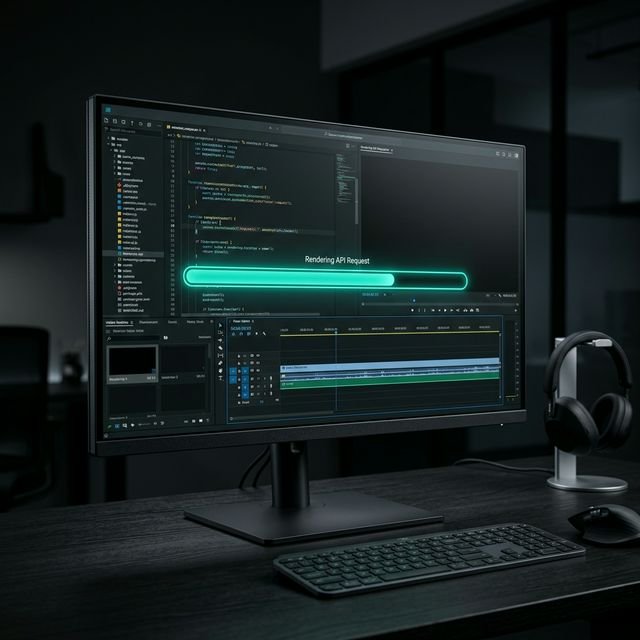
Deep Dive: Where Agencies Are Actually Making Money
Despite the high costs of re-rolling prompts, smart agencies aren’t abandoning the tool; they are just restricting where it gets used. If you try to generate a perfectly synced, narrative-driven A-roll shot with specific character acting, you will burn through your budget in an afternoon. But if you deploy the API strategically, it prints money. Here is exactly where the Sora API is highly profitable right now.
- Pitch Decks and Storyboarding: This is the killer use case. Instead of hiring a sketch artist or using static Midjourney images for a client pitch, agencies are using Sora to generate “mood boards in motion.” Clients are absolutely blown away by seeing a rough, moving mock-up of their commercial before any actual filming begins. The minor AI artifacts don’t matter because it’s just a proof-of-concept.
- Abstract B-Roll for Social Media: Need a slow-motion shot of coffee beans falling, or a hyper-lapse of a futuristic city? Sora handles inanimate objects and sweeping drone shots perfectly on the first try. You can bypass costly stock footage subscriptions by generating exact, bespoke B-roll tailored perfectly to your client’s brand colors.
- Dynamic Backgrounds for Green Screen: Rather than flying a crew to Iceland for a car commercial background, editors are using the API to generate stunning 4K environments. They then composite real, human actors (shot cheaply in a local studio) over the AI-generated plates. This drastically cuts travel and location scouting budgets.
- A/B Testing Ad Creatives: Instead of shooting one costly video for a Facebook ad campaign, agencies can use the API to generate 50 variations of the same scene with different lighting, weather, or background styles. They run them all with low-budget spends to see which one converts, and only then invest in polishing the winner.
The Catch: Where It Fails Miserably
I cannot stress this enough: do not sell a client on a highly specific, complex human action sequence generated purely by AI. The physics engine inside Sora, while leaps and bounds ahead of older models like Runway Gen-2, still fundamentally struggles with object permanence and complex human anatomy during extended motion.
If two subjects need to interact—like two people hugging, shaking hands, or passing an object—the API will chew through your wallet. The model frequently merges textures when objects overlap. I ran a test asking for a simple clip of a chef chopping an onion. The first generation gave the chef three arms. The second generation turned the knife into a spoon halfway through the chop. The third generation made the onion melt into the cutting board. By the time I got a passable 4-second clip, I had spent $12 in API credits.
Furthermore, maintaining temporal consistency across multiple shots is a nightmare. If you generate a character in Scene 1, trying to get the exact same character with the exact same jacket and lighting in Scene 2 requires incredibly complex prompting and seed matching. If you are a boutique agency running on tight, fixed-fee retainers, these unpredictable API generation costs can instantly push a profitable project into the red.
The Final Verdict: My Recommendation for 2026
Is the OpenAI Sora API a massive leap in generative technology? Absolutely. But is it a magic wand that completely eliminates your video production budget? Not even close. In fact, for highly specific narrative work, it might currently be more expensive than hiring a junior editor to scrub through Artgrid or Storyblocks.
If you run a creative agency, you need to treat the Sora API like a high-end VFX plugin rather than a replacement for your camera crew. Use it relentlessly for pre-production, client pitches, abstract B-roll, and rapid prototyping. Set strict API spending limits per project in your developer console so a frustrated creative director doesn’t accidentally burn $500 re-rolling a shot of a dog walking.
The agencies that will win in the next 12 months aren’t the ones trying to generate 100% of their commercials with AI. The winners will be the hybrid shops: the teams that use Sora to generate stunning backgrounds, but still use real human talent and traditional editors to composite the final piece. Keep a close eye on your compute costs, bill the API usage back to the client as “Generative Compute,” and don’t fire your video editors just yet. They are the only ones who know how to fix the AI’s mistakes in post-production.
Frequently Asked Questions (FAQs)
How much does 1 minute of video cost on the Sora API?
While base costs fluctuate based on resolution and framerate, a raw 60-second generation at 1080p will run you a baseline compute cost. However, because you rarely get a perfect video on the first try, agencies should realistically budget for a 5x to 10x multiplier on that base cost to account for required re-rolls and prompt adjustments.
Can I use Sora API videos for commercial client work?
Yes. Under OpenAI’s current terms of service for API users, you retain the commercial rights to the generated outputs. However, you must still be cautious about inadvertently prompting the AI to generate copyrighted material, logos, or celebrity likenesses, which could open your agency up to legal liabilities.
Does the API generate audio alongside the video?
No. Currently, the Sora API is strictly a video diffusion model. You will still need to handle all sound design, voiceovers, and foley work using traditional audio libraries or separate AI audio generation tools like ElevenLabs, which adds another layer of post-production cost to your workflow.