Government Jobs in India 2025-26: Your Complete Roadmap to Get Your Dream Job From 1 Lakh+ Vacancies

25 million Indians compete for government positions every year, with railways alone receiving applications for just 90,000 roles. But here’s what most people miss—while the competition is fierce, the opportunity has never been better.
Why? The 8th Pay Commission is bringing a 30-34% salary hike for government employees starting January 2026. Suddenly, entry-level salaries are jumping from ₹18,000 to ₹41,000 monthly. Plus, 6 million new government jobs are expected from PLI schemes by 2025-26. This guide covers everything you need—from which government jobs are actually hiring, to preparation strategies, to avoiding the mistakes that sabotage 95% of aspirants.
Why Government Jobs Matter More Than Ever
Government jobs offer something increasingly rare in 2025: permanence. You’re not one quarterly review away from being laid off. You can plan your life, buy a house with confidence, and actually sleep at night knowing your paycheck is secure.
The 8th Pay Commission game-changer is massive. With a projected fitment factor of 2.28, salaries could jump by 34.1%. An entry-level employee earning ₹18,000 monthly could be looking at ₹41,000 within months. This affects 49 lakh central government employees and 65 lakh pensioners—a financial transformation across the government sector.
Beyond salary, there’s societal respect. Your family knows you’ve made it. Your neighbors know you’re secured. Psychologically? That matters when comparing the stress levels of private sector jobs.
The Government Jobs Landscape: What’s Hiring Now
Over 1 lakh government job vacancies are currently open. Here’s where the real opportunities are:
Teaching Positions: The Biggest Opportunity
This is massive. RSSB is recruiting 7,759 primary and upper primary teachers. KVS and NVS combined are opening 14,967 teaching positions. Every state has its own quota. If you’re eligible (Bachelor’s degree with B.Ed), teaching jobs are your golden ticket—lower competition than railways, faster recruitment, and immediate job security. Average salary: ₹35,000-₹50,000 monthly, plus incredible benefits.
Railways: The Dream for Millions
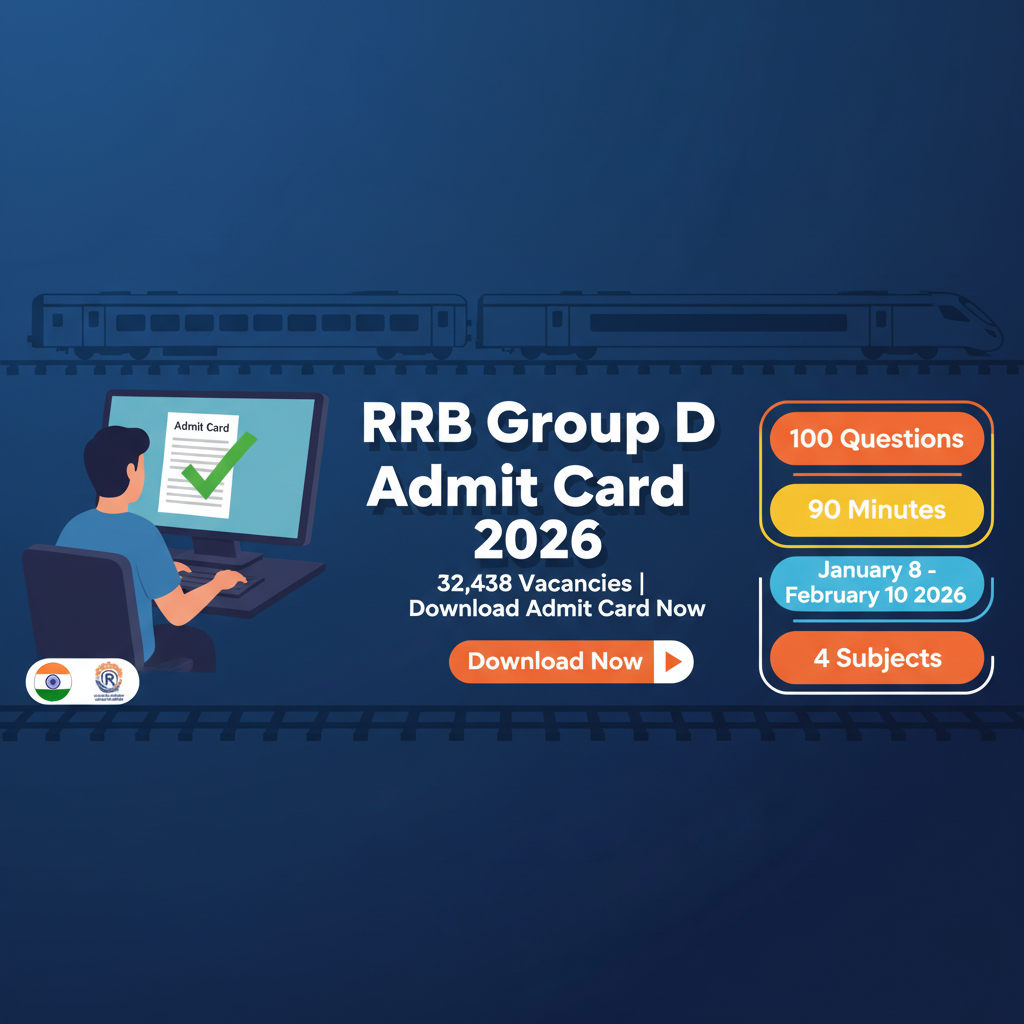
RRB is recruiting across multiple categories: Station Master (3,058 posts), Traffic Assistant (5,810 posts), and Apprentices (4,116+ posts). Railway jobs combine decent salary (₹25,000-₹45,000), job security, and massive perks like railway passes for family.
Banking Sector
Bank of India is recruiting 115 specialist officers, Bank of Baroda 2,700 apprentices, PNB 750 local bank officers. Banking jobs pay well (₹30,000-₹60,000+ for officers) with good work-life balance and superb pension benefits.
Defence & Paramilitary Forces
IAF is recruiting 340 officers. Territorial Army is hiring over 4,000 soldiers. Defence jobs come with allowances that boost salary 50%+ above base pay, plus incredible retirement benefits.
The Real Statistics: Understanding Your Odds
Let’s talk about actual success rates:
UPSC Civil Services (The Hardest)
Applications: 8-10 lakh annually
Appear for Prelims: Only 50% (4-5 lakh)
Clear Prelims: 0.15% (11,000-15,000)
Final Selection: 0.001% (800-1,100)
The official success rate is less than 1%. But here’s the secret: among 4-5 lakh who appear, only 45,000-62,000 are genuinely serious. For serious candidates? Success rate jumps to 2% in prelims.
SSC & Railways: More Achievable
Success rates are 0.5-2%, significantly better than UPSC with equal job security. If you’re uncomfortable with UPSC’s current affairs depth, railways and banking exams are your sweet spot.
Step-by-Step Preparation Strategy That Works
Step 1: Choose Your Exam Strategically
Don’t pick because it sounds prestigious. Pick based on:
Your educational background (engineering → railways/PSU, arts → SSC/UPSC)
Your current affairs strength (weak in news? railways is better)
Timeline (can you study 8-12 months? UPSC yes. Quick need? Banking no.)
Step 2: Master the Exam Pattern
Spend the first week understanding the exam completely. Read the official notification three times. Understand how many questions, negative marking, which sections are qualifying vs scoring, and time management per section.
Step 3: Create a Structured 6-9 Month Plan
Phase 1 (Months 1-2): Foundation Building – Learn basics of each subject, take diagnostic tests
Phase 2 (Months 3-4): Intermediate & Mock Tests – Increase difficulty, start full-length mocks
Phase 3 (Months 5-6): Advanced Practice & Speed – Focus on tricky questions, improve accuracy
Phase 4 (Months 7-8): Mock Test Marathon – Take mocks like real exams under pressure
Phase 5 (Months 8-9): Revision & Fine-tuning – Revise high-yield topics, mental prep
Step 4: The Mock Test Secret
This is where 90% of government exam success happens. Serious candidates take 50-100 mocks. Casual candidates take 5-10. Mocks reveal weak topics, teach time management, reduce test anxiety, and identify patterns in questions.
Step 5: Current Affairs Daily
For UPSC, SSC, and railways, current affairs is critical. Spend 1-2 hours daily reading:
The Hindu (editorial section)
Indian Express
Down to Earth (for environment)
Yojana Magazine (for policies)
Keep notes. Write 2-3 lines on every major event for revision.
Step 6: Health & Mental Resilience
This rarely gets discussed but it’s absolutely critical:
Sleep 7 hours minimum. No compromise.
Exercise 30 minutes daily
Eat properly. No surviving on junk.
Take breaks. One full day off weekly minimum.
Meditate or do something that calms your mind.
The difference between who clears and who fails often comes down to who stayed mentally sharp.
Real Success Stories Proving It’s Possible
Saurabh Kumar Singh: From Zero Clears to RRB Clerk Success
Saurabh failed the railway exam in 2021. Zero success. Instead of giving up, he analyzed what went wrong—poor time management and insufficient mock analysis. In 2024, he finally cleared RRB Clerk. His secret? Never compare your chapter 1 with someone else’s chapter 20.
Rahul Pareek: AIR 13 SSC CGL
Rahul was a commerce student from Rajasthan with no coaching. He achieved AIR 13 through self-study using YouTube and free resources. His secret wasn’t genius—it was consistency. Same time, every day, same place, for 9 months.
Srushti Jayant Deshmukh: AIR 5 UPSC Without Coaching
Most UPSC toppers have coaching. Srushti cleared with AIR 5 through self-study. Her approach? Deep reading, understanding rather than memorizing, and rejecting the rat race of “which source is best.” She picked one source per subject and mastered it completely.
The common thread? None are geniuses. They started, stayed consistent, analyzed failures, and didn’t give up.
Critical Mistakes to Avoid
Mistake #1: Choosing the Wrong Exam
You pick UPSC for prestige, but you hate current affairs. This sets you up for failure. Choose an exam matching your strengths, not your ego. Nothing wrong with banking or railways instead of UPSC.
Mistake #2: Jumping Between Study Materials
One month YouTube, next month a different channel, then a book, then an app. Your brain gets confused. Pick one quality resource per subject and stick with it for 3-4 months.
Mistake #3: Ignoring Current Affairs
You memorize every geography fact but can’t name current ministers. Government exams test relevant knowledge. Spend time on current affairs or watch your score stagnate.
Mistake #4: Skipping Mock Tests
You think you’re too busy. Mocks reveal truth about your performance. Analyze every mock thoroughly—this is where real learning happens.
Mistake #5: Poor Time Management
You study 12 hours but only 4 are productive—scrolling, snacking, distracted. Real preparation needs focused time blocks. 4 hours focused beats 12 hours distracted.
Mistake #6: Giving Up After Failure
Most successful candidates failed at least once. Failure is data, not the end. Analyze and improve. Many talented people quit here and never return.
Government Jobs Trends in 2025-26
Tech Roles Growing Fast: Government is hiring data scientists, cybersecurity experts, IT specialists (₹50,000-₹100,000+ monthly) with less competition than traditional exams.
Sustainability Focus: Climate change created new government roles—environmental engineers, forest officers, climate specialists with good growth potential.
Inclusive Hiring Expanding: More positions reserved for SC/ST/OBC, PWD candidates, and women-specific roles. Your chances have improved significantly if you belong to reserved categories.
Faster Recruitment: Some departments now hire in 6-8 months instead of 18 months, changing the game for quick preparation.
Your Action Plan: Start This Week
Day 1: Decide which exam matches you (teaching, railways, banking, UPSC, SSC)
Day 2: Read the official notification completely
Day 3: Find three quality study resources, download/buy them
Day 4: Check current syllabus, note weak areas
Day 5: Take one diagnostic test to understand baseline
Day 6: Create a calendar with 6-month study schedule
Day 7: Start studying—same time, same place, every day
Final Thoughts
Government jobs aren’t a lucky break. They’re an earned achievement. Yes, 25 million apply. Yes, most fail. But thousands succeed yearly—not because they’re smarter, but because they played strategically and didn’t quit.
The 8th Pay Commission is coming. Jobs are available. The opportunity has never been better. What you do in the next 6-12 months determines whether you’re among the thousands who make it or millions who don’t.
Your dream job isn’t fantasy. It’s waiting for you to claim it. Start today.