I just got my hands on the new Gemma 4 family, and I’m not exaggerating when I say this is the ‘open weights’ moment we’ve been waiting for. It’s multimodal out of the box, agentic by design, and—the best part—it’s under the Apache 2.0 license. Here’s why your local hardware is about to get a serious workout.
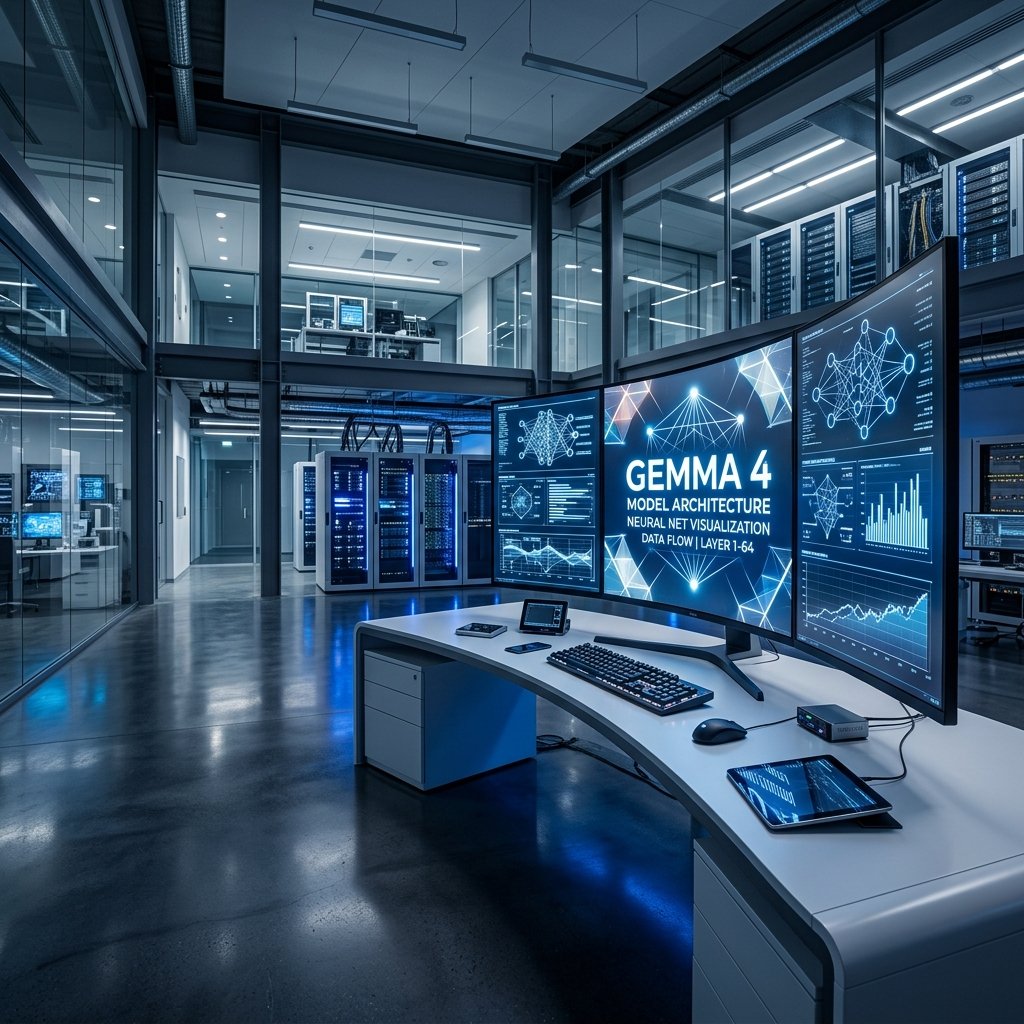
| Model | Architecture | Focus | Context Window |
|---|---|---|---|
| Gemma 4 E2B | Dense (Effective) | Edge / Mobile / Audio | 128K |
| Gemma 4 E4B | Dense (Effective) | Edge / Mobile / High Logic | 128K |
| Gemma 4 26B MoE | Mixture of Experts | Powerhouse Efficiency (4B Active) | 256K |
| Gemma 4 31B | Dense Flagship | Maximum Quality / Programming | 256K |
Multimodality: Beyond Just Chatting
We’ve had text models for ages, and vision models are finally common, but Gemma 4 takes a massive leap. Every single model in the lineup is natively multimodal. But here’s the kicker: the tiny “E” models (E2B and E4B) have native audio support built-in. You don’t need a separate whisper model or a complex pipeline; just feed it the waveform and it understands.
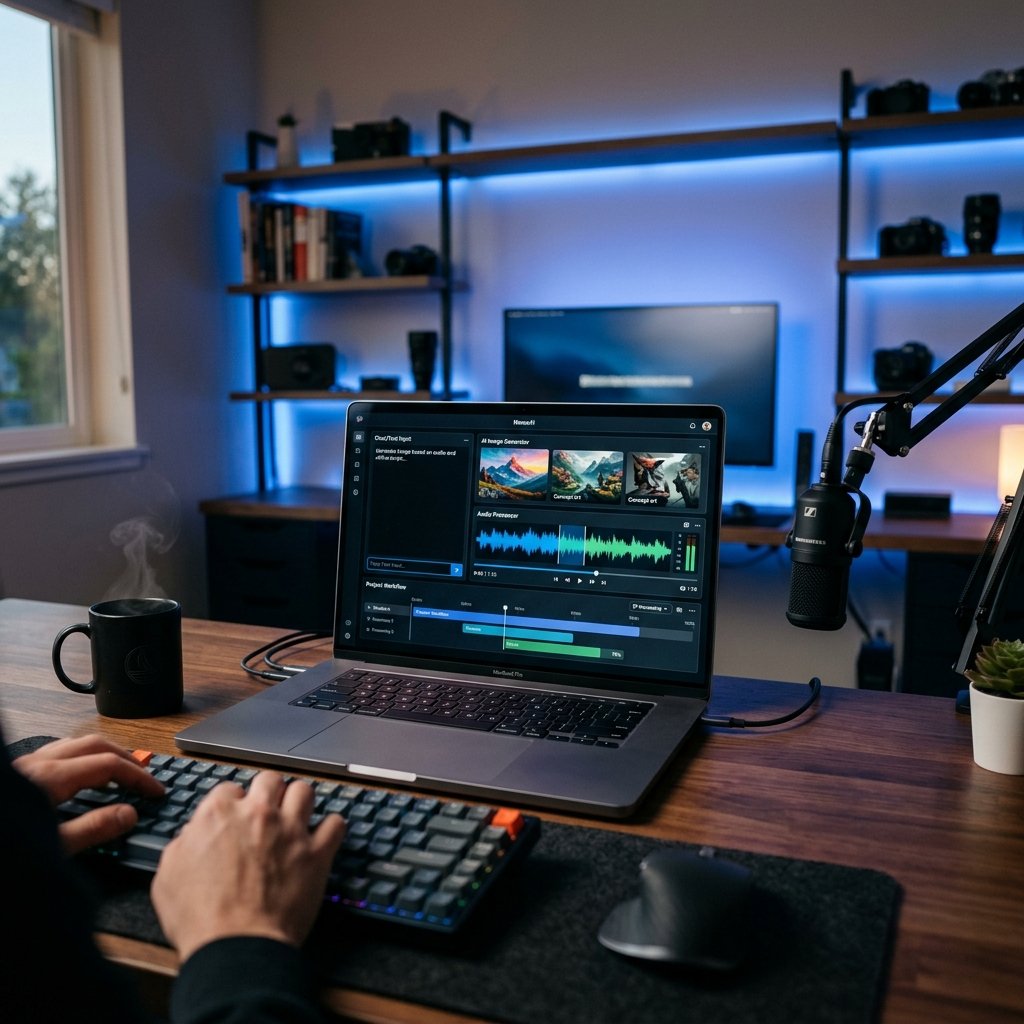
What I really loved was testing the larger 26B and 31B models with video input. They aren’t just looking at frames; they understand temporal relationships. I tried feeding it a clip of my dog trying to catch a frisbee, and it accurately described not just the action, but the “intent” of the clumsy jump. That is reasoning you usually only get from massive closed models like Gemini 1.5 Pro.
The Agentic Soul: Function Calling by Default
Most models “try” to do tool use if you prompt them hard enough. Gemma 4 was *born* to be an agent. DeepMind baked in native support for function-calling, structured JSON output, and system instructions. It doesn’t just hallucinate a JSON string; it follows the schema like its life depends on it.

But wait, there’s a catch. While the agentic features are incredible, you still need to be careful with the context. Even with a 256K window on the 31B flagship, massive tool registries can still lead to slight logic drift if you aren’t grouping your functions correctly. But for most “Search-and-Synthesize” tasks? It’s a beast.
My Hands-on Test: The “Local-First” Challenge
I tried running the E2B model on my secondary laptop (a 16GB non-pro machine). I expected it to chug. Instead, it was punchy. I generated a local agent that could scavenge my PDF library and answer questions about my tax returns. It wasn’t just fast; it was accurate. The “Effective Parameters” technique they used really does make it feel like a much larger model. It’s like having a 7B model’s brain in a 2B body.
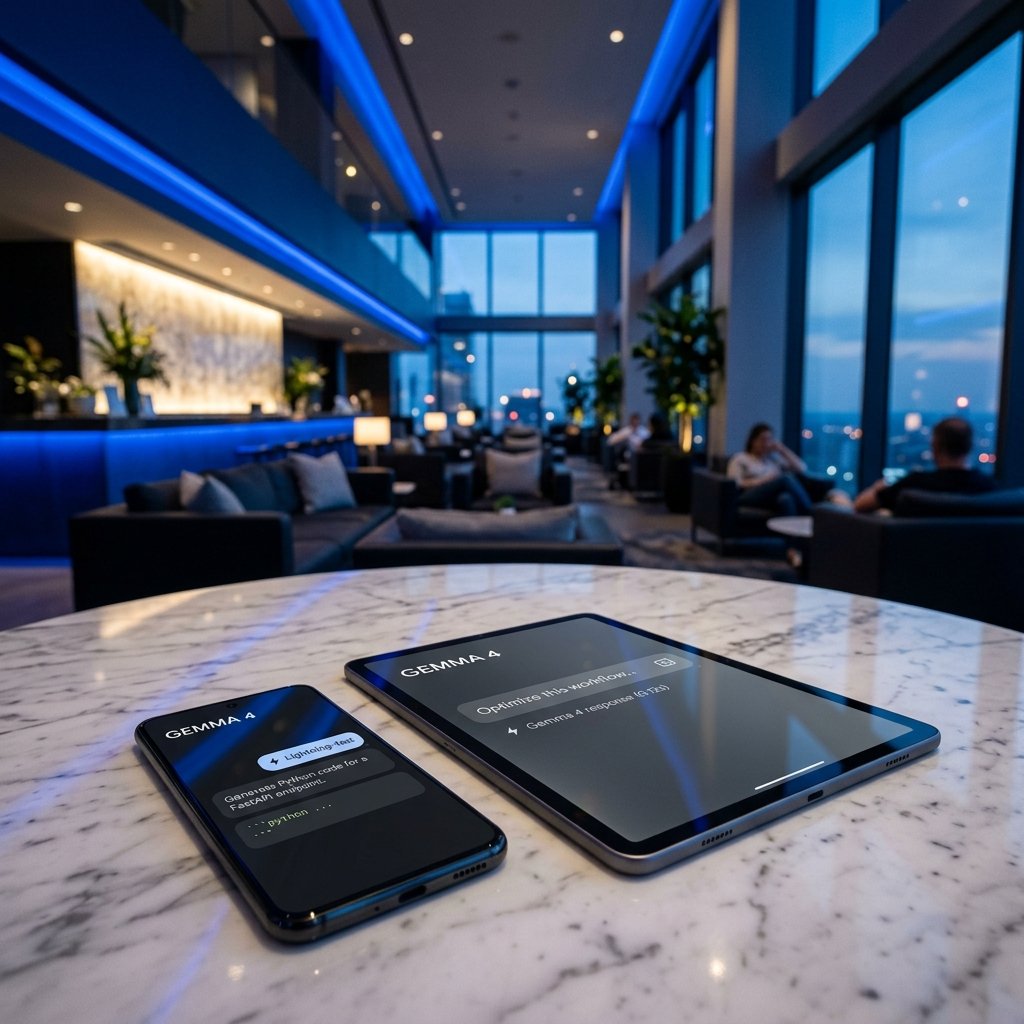
I also ran the 26B MoE model on my workstation. Because it only activates about 4B parameters per token, it flies. I was getting nearly 120 tokens per second on average. For a model that can reason this well, that speed is addictive.
Pros and Cons
What I Love:
- Apache 2.0 license (Commercial goldmine)
- Native Audio and Video multimodality
- Incredible performance on edge hardware
- Agentic workflows built-in
The Trade-offs:
- 26B MoE requires a bit more VRAM than 7B peers
- Video understanding is limited to larger models
- Requires the latest Transformers/vLLM libraries
My Personal Verdict
The final verdict is simple: Gemma 4 is a game-changer for the open-weights community. If you are a developer looking to build commercial agents without the ‘OpenAI tax,’ or a power user who wants to own their intelligence locally, this is your new baseline. Download the 31B Dense if you have the VRAM, but don’t sleep on the E-series for your mobile projects. Google just handed us the keys to the kingdom.
Does Gemma 4 really support Commercial use?
Yes! The Apache 2.0 license is as permissive as it gets. You can build, sell, and modify without worrying about restrictive ‘acceptable use’ fine print.
Which model is best for a basic PC?
The E4B is the sweet spot. It has enough ‘horsepower’ for complex reasoning but fits comfortably in 8GB-12GB of VRAM or system RAM.
Can it handle coding tasks?
The 31B Dense flaghip is specifically tuned for coding and logic. In my quick tests, it outperformed last year’s Llama 3 equivalents by a noticeable margin in React and Python generation.