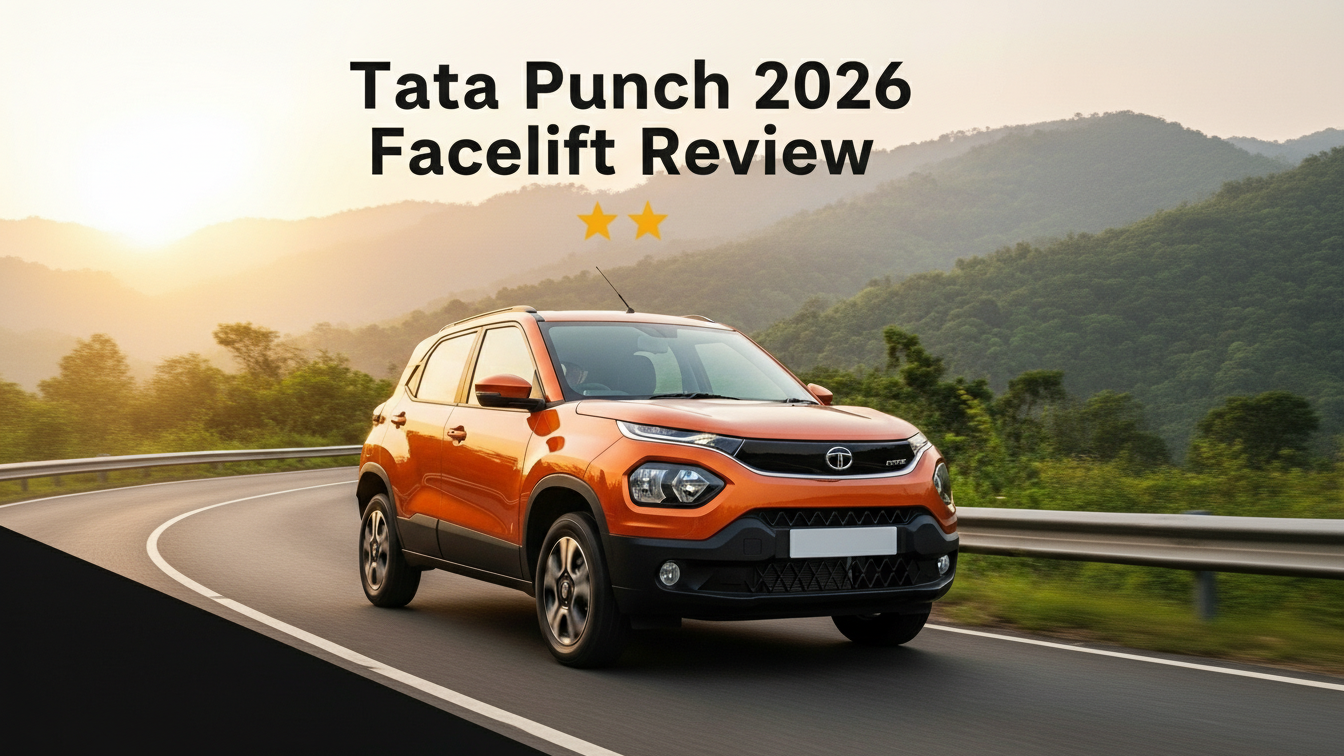

Tata Punch 2026 Facelift Review: Turbo Power & CNG AMT Explained
The 2026 Tata Punch is back with a vengeance. With a new Turbo Petrol engine and CNG AMT, is it enough to beat the Hyundai Exter? Read our honest Indian expert review.
The “Chota Hathi” Strikes Back
If you follow the Indian car market as closely as I do, you know the story of the Tata Punch. It arrived in 2021, smashed safety records with 5 stars, and became the “Desh ka SUV.” In 2024, it was India’s best-selling car—the first non-Maruti to hold that crown in four decades.
But late 2025 was tough. Sales dipped, slipping to the number 10 spot. Why? Because you, the smart Indian buyer, stopped buying. You heard the rumors of an update, and you decided to wait.
Well, the wait is over. The 2026 Tata Punch Facelift is here, and Tata Motors MD Shailesh Chandra is already predicting sales will hit a “new peak.” Why is he so confident? Because they finally fixed the two biggest complaints we’ve all had for years: a lack of power and a tiring left leg in city traffic.
Here is why the 2026 Punch might just be the most complete small car in India right now.
What’s New in 2026? The Big Upgrades
This isn’t just a “sticker job” facelift. Tata has made mechanical changes that actually matter on our roads.
1. The Turbo Petrol Engine (Finally!)
For years, my biggest gripe with the Punch was its 1.2L naturally aspirated engine. It felt lazy on highways, especially with four passengers and AC on.
- The Change: The 2026 Punch gets the 1.2L Turbo Petrol unit (borrowed from the Altroz/Nexon).
- Real World Impact: Overtaking on the Mumbai-Pune Expressway is no longer a “plan 10 seconds in advance” event. It pulls cleanly, and you don’t need to downshift constantly.
2. CNG + AMT: The City Commuter’s Dream
Driving a manual CNG car in Bangalore or Delhi traffic is a workout. Tata changed the game with the Tiago/Tigor CNG AMT, and now the Punch gets it too.
- The Change: You can now buy the factory-fitted CNG version with an Automated Manual Transmission (AMT).
- Why it matters: You get the low running cost of CNG (approx ₹2-3/km) without the headache of using the clutch 500 times a day.
Real-World Driving Experience
City Usage:
I spent a week driving the new CNG AMT variant in rush-hour traffic. The “creep” function is smooth, and the gear shifts, while noticeable (it is an AMT, after all), are much improved. The high seating position still gives you that “SUV feel”—you look eye-to-eye with Creta drivers, not up at them.
Highway Usage:
The Turbo Petrol is the star here. It cruises effortlessly at 100-110 km/h. The suspension remains the Punch’s superpower. It swallows potholes, speed breakers, and those random unmarked road patches with a solid “thud” rather than a crash. It feels like a tank compared to the flimsier feel of some competitors.
Mileage (Kitna Deti Hai?):
- Petrol Manual: ~14-15 km/l (City) | ~18 km/l (Highway)
- Turbo Petrol: ~12-13 km/l (City) | ~16 km/l (Highway)
- CNG AMT: ~22-24 km/kg (Real world mixed usage)
Comparison: Punch 2026 vs. The Rivals
| Feature | Tata Punch (2026) | Hyundai Exter | Citroen C3 |
| Safety | 5 Stars (Global NCAP) | Not yet rated | 0 Stars (Global NCAP) |
| Engine | 1.2L NA / 1.2L Turbo | 1.2L NA only | 1.2L NA / 1.2L Turbo |
| CNG Auto? | Yes (Twin Cylinder) | Yes (Single Cylinder) | No |
| Ride Quality | Robust, heavy feel | Soft, city-focused | Excellent suspension |
| Tech | 10.25″ Screen, 360 Cam | Dashcam, Sunroof | Basic Tech |
Key Takeaway: The Exter is still smoother and has better fit-and-finish, but the Punch wins on safety and highway confidence.
Ownership & Maintenance
Service Costs:
Tata’s service network is massive, reaching even remote villages. Expect a general service cost of ₹4,000 – ₹6,000 per year for the petrol variant. The Turbo might cost slightly more to maintain in the long run.
Common Niggles:
- Fit and Finish: While improved, you might still find some uneven panel gaps compared to a Hyundai.
- Touchscreen Lag: The new 10.25-inch screen is crisp, but the software can still be occasionally slow to boot up.
Verdict: Who Should Buy It?
Buy the Punch 2026 IF:
- Safety is your #1 priority. You want a solid metal shell around your family.
- You drive on bad roads. The ground clearance and suspension are built for Indian realities.
- You want a cheap-to-run city car. The CNG AMT is a fantastic daily driver.
Skip the Punch IF:
- You want premium interiors. The plastic quality is durable but hard. The Hyundai Exter feels more “posh” inside.
- You want a silky smooth engine. Tata’s 3-cylinder engines still have that characteristic vibration at idle.
Expert Advisory
The 2026 Tata Punch has evolved from a “good first car” to a “great all-rounder.” The Turbo engine fixes the power deficit, and the CNG AMT fixes the convenience issue. It’s no surprise Tata bosses are confident about hitting new sales peaks.
⚠️ The “Do It Yourself” Reality Check
Reading this blog is step one. Step two is verifying it for yourself.
- Test the “Rubber Band” Effect: Drive the AMT version on an incline (like a mall parking ramp). See if it rolls back or struggles.
- Sit in the Back: If you are tall (6ft+), check the rear legroom behind your own driving position. It can be tight.
- Check the Offers: Tata dealers are known for variable discounts. Check the official Tata Motors Website for the latest “On-Road Price” in your city before negotiating.
FAQs
Q1: Is the Tata Punch Turbo worth the extra money?
A: If you drive on highways frequently, absolutely yes. The extra torque makes overtaking much safer. If you are strictly a city driver, save the money and get the normal petrol or CNG.
Q2: Does the Twin-Cylinder CNG really leave boot space?
A: Yes. Tata’s twin-cylinder tech places the tanks under the boot floor. You get a usable boot (approx 210 liters) that can easily fit two weekend bags, unlike competitors where the spare wheel takes up all the space.
Q3: Is the Punch safer than the Exter?
A: On paper, yes. The Punch has a verified 5-star GNCAP rating. The Hyundai Exter has not been crash-tested by GNCAP yet.
Q4: What is the waiting period for the 2026 model?
A: With the new launch hype, expect a waiting period of 4-6 weeks for popular colors like “Tropical Mist” and the new Turbo variants.
Q5: Can the CNG AMT climb steep hills?
A: It can, but you will need to be patient. AMTs can hesitate on steep inclines. Always use the handbrake for hill starts if your variant doesn’t have Hill Hold Assist.