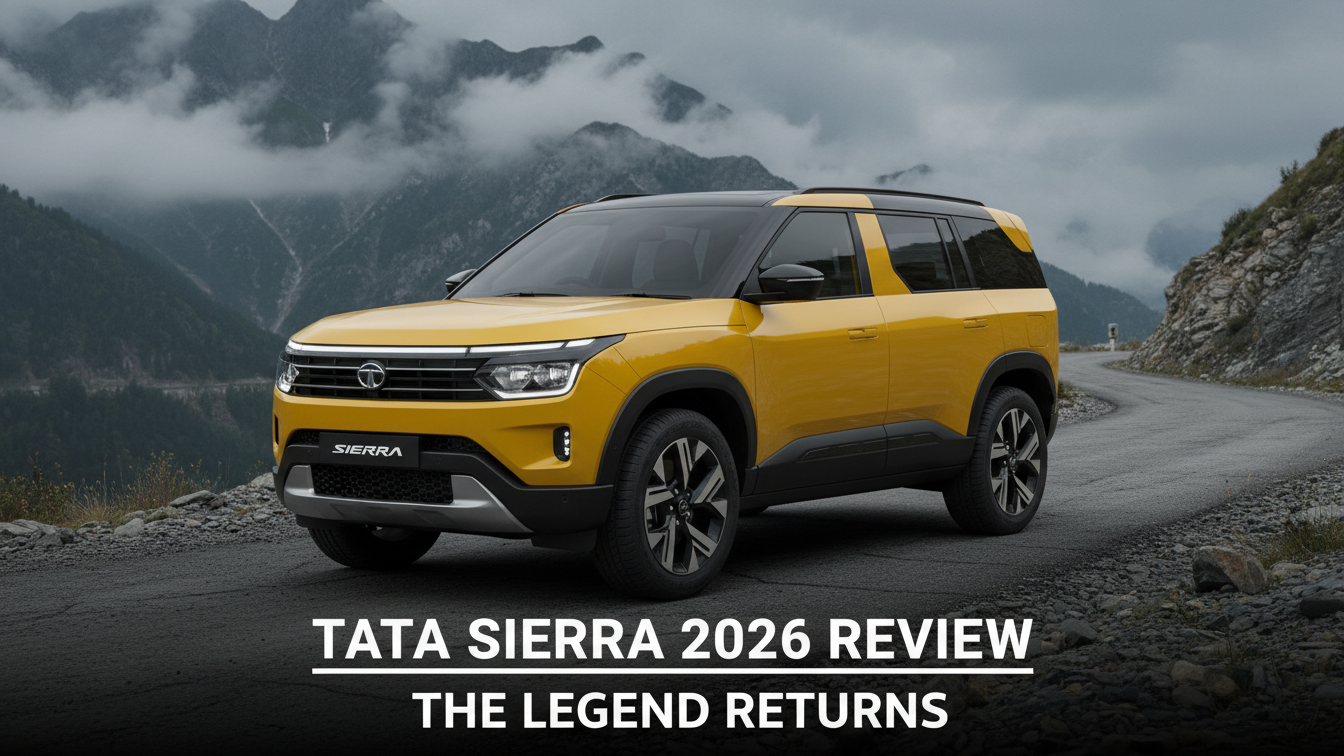

Tata Sierra 2026 Detailed Review: The “Lounge” SUV We’ve Been Waiting For.
The Tata Sierra is back in 2026! With “Lounge” seating, triple screens, and a 1.5L Turbo engine, can it beat the Creta and Scorpio-N? Read our honest Indian expert review.
30 Years in the Making
If you grew up in the 90s, the name Tata Sierra means something to you. It was India’s first “cool” SUV—the one with the massive glass windows that made you feel like you were sitting in an observation deck.
Fast forward to January 2026, and the legend has officially returned. But is it just a nostalgia trip? Absolutely not. After driving the production-spec Sierra (ICE version) for 500 km across highway straights and Mumbai traffic, I can tell you this: Tata hasn’t just brought back a nameplate; they have created a new segment.
Priced aggressively from ₹11.49 Lakh, the Sierra is positioning itself right between the polished Hyundai Creta and the rugged Mahindra Scorpio-N. Here is the detailed breakdown of what you get for your money.
Design: The “Glasshouse” is Back
The first thing you notice is that it looks like a Sierra. Tata has masterfully retained the signature “Alpine” windows (the glass that wraps over the roof) while making it modern.
- The Homage: The blacked-out C and D pillars create that iconic “single piece of glass” look.
- The Modern Touch: It gets the futuristic “Light Saber” DRL bar across the front (like the Harrier/Nexon) but with a boxier, more upright stance.
- Road Presence: Unlike the curvy Creta or the sloping Curvv, the Sierra is boxy. It commands respect on the road. It looks bigger than it actually is.
The Interior: “Lounge” Life (The Real USP)
This is where the Sierra destroys the competition. Tata calls it the “Lounge” Concept, and for once, it’s not marketing fluff.
1. The Rear Seat Experience
In the top-spec Accomplished+ trim, the rear seats are not just benches; they are recliners. You get massive legroom, and because of the boxy roof, the headroom is fantastic even for 6-footers. The “Glasshouse” rear section (fixed glass roof at the back) makes the cabin feel incredibly airy.
2. The Triple Screen Setup
We saw it in concepts, and they actually built it.
- Screen 1: 10.25″ Driver Display
- Screen 2: 12.3″ Central Infotainment (JBL Sound)
- Screen 3: Passenger Screen (Yes, your co-passenger can watch movies or control music independently).
Pro Tip: If you have motion sickness, the rear seat might feel too open because of the massive glass area. Test it first.
Performance: The New Heart
The 2026 Sierra comes with two main engine options (with the EV coming in March):
- 1.5L Turbo Petrol (Hyperion): This is the new beast. producing ~170 PS power. It’s fast. The initial lag is there, but once the turbo spools, it pulls hard. It makes the Creta 1.5 Turbo feel a bit sedate.
- 1.5L Diesel: The trusty workhorse. It’s noisy but efficient. If you do 2000+ km a month, stick to this.
Ride Quality: Tata has tuned the suspension for comfort. It’s softer than the Nexon. It glides over potholes, but this means there is some body roll in corners. It’s a cruiser, not a corner carver.
Ownership: The Practical Stuff
Mileage (Real World):
- Turbo Petrol AT: 9 – 11 km/l (City) | 14 – 15 km/l (Highway) – Thirsty if you drive hard!
- Diesel MT: 14 – 16 km/l (City) | 19 – 21 km/l (Highway)
Service & Reliability: This is a sophisticated car with a lot of electronics (3 screens, powered seats, ADAS). Tata’s service has improved, but with a Version 1.0 product, expect some software glitches in the first batch. The infotainment screen might freeze occasionally—a classic Tata quirk.
Verdict: Should You Buy It?
Buy the Sierra 2026 IF:
- You are Chauffeur Driven: The rear seat is the best in the segment, hands down.
- You Want Unique Style: It turns heads like nothing else. It’s not “just another SUV.”
- You Need Space: The boot (622 Liters) is massive compared to the Creta’s ~433L.
Avoid the Sierra IF:
- You want 18 km/l from a Petrol car: The Hyryder/Grand Vitara Hybrid is far more efficient.
- You hate Touchscreens: Almost every control is on a screen. Physical buttons are rare.
⚠️ The “Do It Yourself” Reality Check
As a reviewer, I can tell you about the specs, but I cannot tell you how the seat fits your back. Before you drop ₹20 Lakhs:
- Visit the Showroom Physically: Go to a Tata showroom. Don’t just look at the car—sit in the back seat for 10 minutes with the doors closed. Does the “Lounge” seating feel comfortable to you, or is it too laid back?
- Check the “Blind Spot”: The thick C-pillar design looks cool but creates a massive blind spot while reversing. Sit in the driver’s seat and check if the 360-degree camera gives you enough confidence.
- Verify the Official Price: Dealers often bundle accessories you don’t need. Check the official ex-showroom price on cars.tatamotors.com before entering negotiations.
- Test the Passenger Screen: If the third screen is a major selling point for you, try connecting your phone to it at the showroom to ensure it works with your specific device.
FAQs
Q1: When is the Sierra EV launching? A: The Sierra EV is confirmed for launch around March 2026. If you want electric, wait a few months. It will likely have a 500+ km range.
Q2: Is the Sierra 4×4 / AWD? A: The ICE (Petrol/Diesel) version is Front Wheel Drive (FWD) only. The upcoming EV version is expected to have a Dual-Motor AWD option.
Q3: Does the glass roof open? A: It’s a mix. The front section is a standard panoramic sunroof that opens. The rear “Alpine” glass section is fixed and does not open.
Q4: Is it a 5-seater or 7-seater? A: The Sierra is strictly a 5-seater. If you need 7 seats, look at the Tata Safari or Scorpio-N.
Q5: How is the 1.5L Turbo Petrol engine? A: It is powerful (170 PS) but can be thirsty in city traffic. Expect single-digit mileage if you have a heavy foot.